
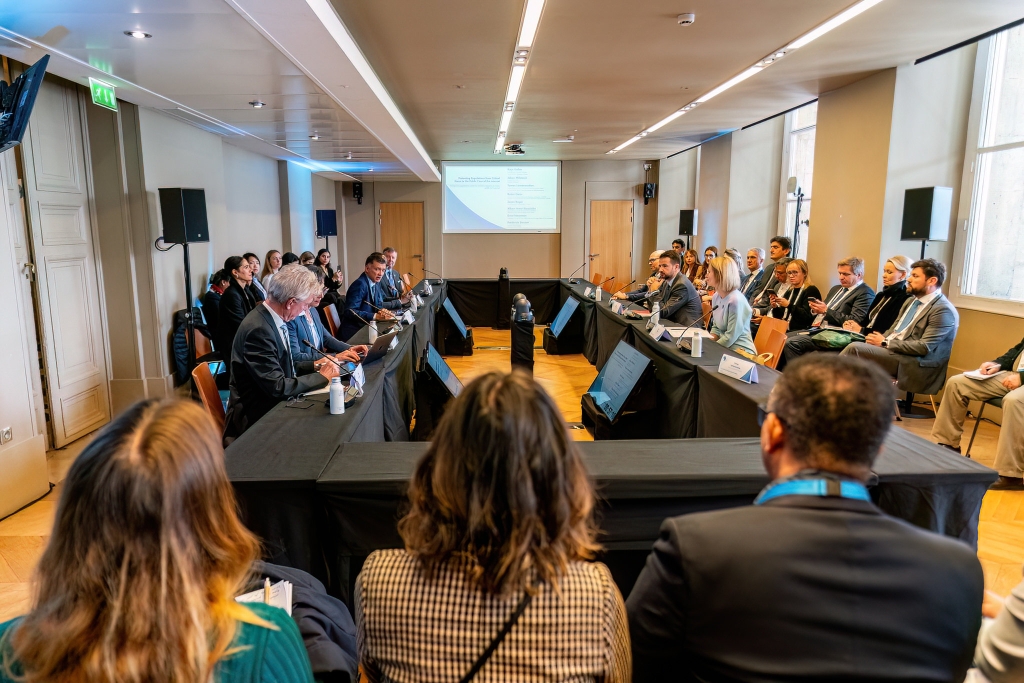
“Cyber attacks are taking place every day and protecting critical infrastructure increasingly needs our attention. The real world and cyberspace are closely connected. Cyber attacks can have сivilian victims too,” said the Estonian prime minister. To counter these malicious attacks, she said, cyber security and social awareness must be raised by teaching the rules of cyber hygiene already in school. It is important to join forces and more courageously share our experience in countering attacks with other countries as well as the private sector.
“No one should feel ashamed of being the victim of a cyber attack. The bad guys share information amongst themselves – so should the good guys. This way, we ensure our resilience. Malicious attacks against critical infrastructure need to receive strong and clear international condemnation. International law also applies in cyberspace,” Kallas added.
The prime minister told the round table that the human-made damage to the Estonian-Finnish gas pipeline and the undersea communications cables connecting Estonia to Finland and Sweden in the Baltic Sea shows how important it is to diversify our critical connections and supplies, and how important the support of our allies is. “As Estonia is connected to Europe via nine cables, damaging one of them will not disrupt our connectivity or jeopardise essential services. The investigation into the circumstances of the damage is still ongoing, but it is important to show our vigilance, and NATO has also confirmed its readiness to respond to any deliberate attacks against the critical maritime infrastructure of the Allies,” Kallas stressed.
The peace forum “Pacte de Paris pour les peuples et la planète” (“The Paris Pact for People and the Planet”) was opened by French President Emmanuel Macron. He launched the format in 2018. The Peace Forum brings together world leaders, and heads of international organisations and corporations to seek solutions to the world’s most pressing challenges.
After a working lunch, during which Kallas met with French social figures and representatives of think tanks, she attended the Christchurch Call summit with President Macron, New Zealand Special Envoy Jacinda Ardern, and other leaders. The initiative, launched in 2019 by New Zealand and France, calls for international cooperation to prevent the spread of terrorist content on the Internet. The initiative was established after the Christchurch mosque shootings in New Zealand, the perpetrator of which broadcast his act of terror online. Christchurch Call brings together 120 countries, technology companies, and civil society organisations.
“My message to the participants of the summit was that we should think about the positive narrative and opportunities related to AI, not just talk about the related threats. ,” said Kaja Kallas. “Our cooperation with industry and civil society should be focused on finding ways to use technologies for our benefit, while giving people the assurance that AI-based solutions are safe and respect fundamental rights and values. For example, artificial intelligence can become an effective tool in the fight against disinformation. Preventive work with young people who spend much of their lives online and involving them in finding solutions is also key to minimising risks.”
Photo: Paris Peace Forum/Office of the President of Montenegro https://flic.kr/s/aHBqjB2SKb

