
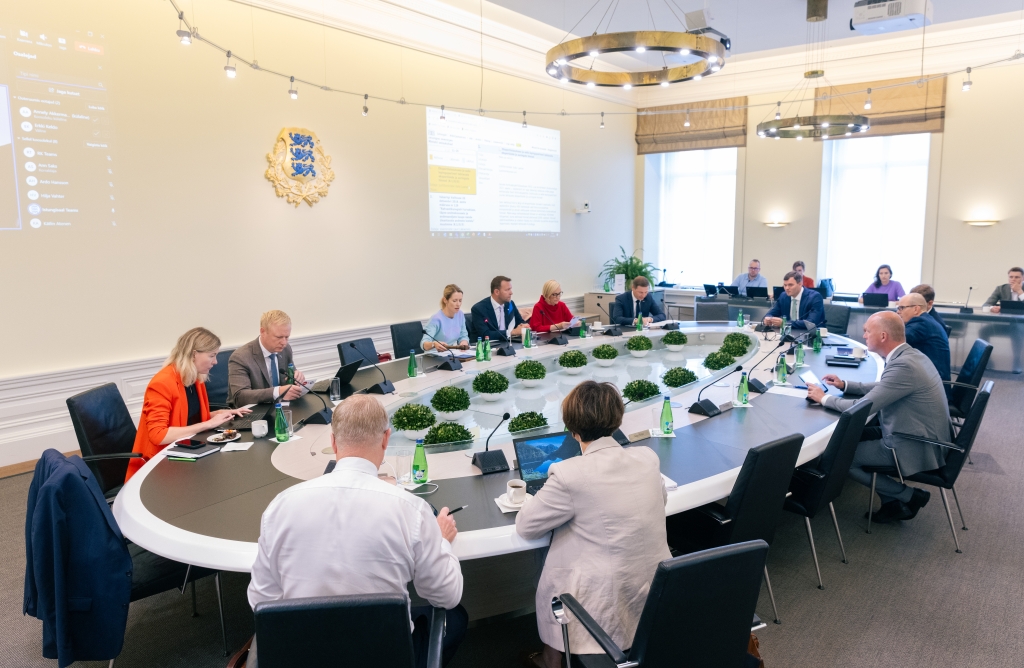
“There has been a discussion about the need to revise the state budget for a while now, because the revenues cannot keep up with expenditures,” Prime Minister Kaja Kallas said. “Since 2016, the Estonian state has been living beyond its means. In addition, COVID, the energy crisis, and the impact of Russian aggression have worsened public finances in recent years. Putting public finances in order is the basis for economic independence and security. To make this happen, the government agreed on a specific roadmap today for the budget review and a steering group to lead it. We will take the budget apart to rebuild it from scratch. We need to analyse each item of expenditure to find a balance between the needs and possibilities of the state so that the quality of services provided by the state does not deteriorate,” said Kallas.
Mart Võrklaev, Minister of Finance, pointed out that the Estonian state has already been reformed over the years to have a small and efficient government by international standards, but this does not mean that the state cannot be made even more efficient. “The track record of Estonian public finances and activity-based budgeting give us a unique opportunity for fiscal innovation and a zero-based budget reform, where we will review all services provided by the state across ministries. We want to keep a close link between the strategies and the national budget in the choices we make, so that we can understand how much taxpayers’ money is being spent to achieve one goal or another, and whether there is duplication of effort or a need for change in our activities.”
Cross-sectoral spending reviews and various performance assessments are also carried out as part of the budget review. “The first major issue to be tackled is the management of public investment, so that all choices are based on analysis and the decision-making process is thoroughly thought through,” said Võrklaev.
“No country has ever examined its budget at this scale and level of systematisation, and an activity-based budget provides a very good basis for this,” added Võrklaev, noting that Estonia would be a frontrunner in this respect.

