
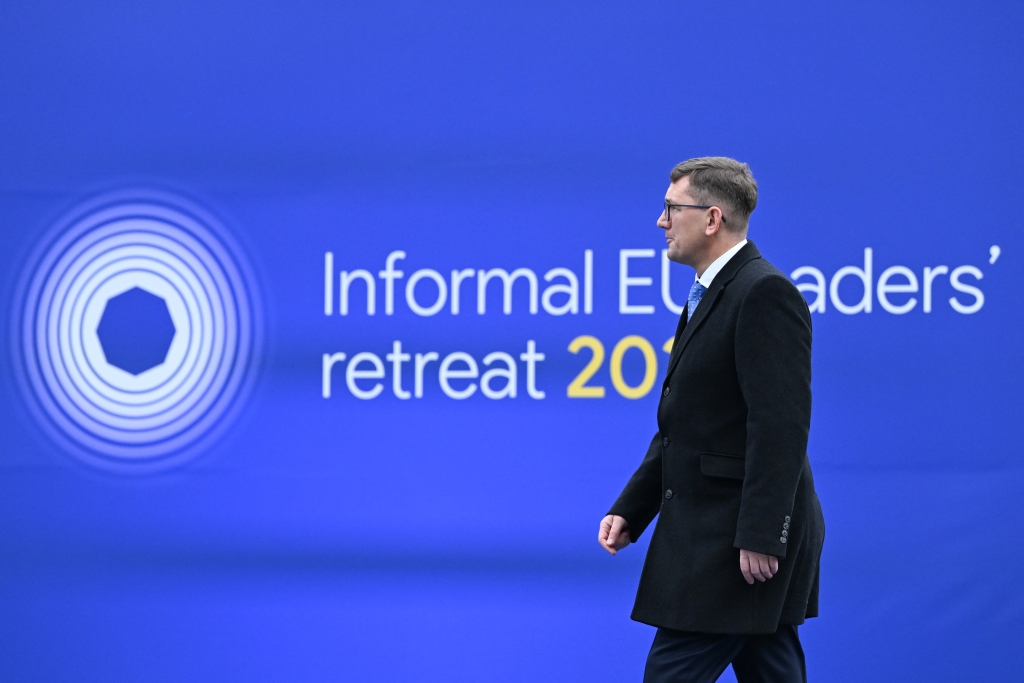
During meetings with European leaders, Michal emphasised the role of digital development and artificial intelligence. “Just as artificial intelligence is seen in Estonia as a natural part of education and public services, the same approach should also take root more broadly across Europe,” said the prime minister.
He added that while the European single market is one of the main strengths of the European Union, its full potential has not yet been realised. In order to improve the functioning of the single market, regulatory fragmentation must also be reduced at the level of the member states, and businesses must be provided with a clearer and more predictable environment.
“If establishing a company takes days or weeks, Europe loses investments. In Estonia, this can be done in minutes – this is the direction Europe should also be moving towards,” said Michal.
“In Estonia, we are accustomed to the state not asking citizens or entrepreneurs for the same information twice – the “only once” principle saves time and lessens frustration. The same approach should also be natural in Europe. The less unnecessary duplication there is, the more energy remains for innovation, growth, and creating new connections,” he added.
According to Michal, connectivity also has a direct impact on competitiveness, especially for the countries at the edges of Europe. “Every new electricity, transport, or data connection improves access to the single market, contributes to price stability, and increases investor confidence,” he noted.
In trade policy, the Estonian prime minister supported the open approach of Europe. “The success of the European economy is based on cooperation and partnerships. We must move forward more quickly with concluding and implementing free trade agreements so that companies have better access to new markets,” said Michal.
The informal meeting of the European Council took place at the Alden Biesen Castle in Belgium at the invitation of European Council President António Costa. The discussions were focused on the competitiveness of Europe, the development of the single market, and economic resilience in the new geopolitical environment. The next formal meeting of the European Council will take place in March, where preparations for political decisions will continue based on the topics discussed at the informal meeting.

