
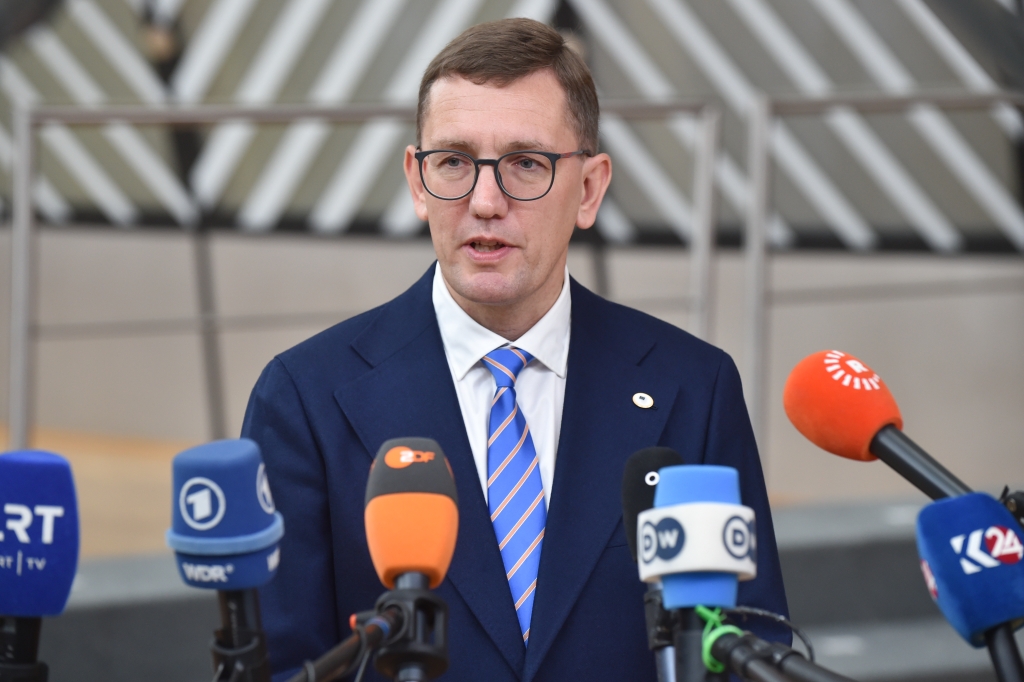
The European Commission’s plan is to reduce the reporting burden on companies by 25%, but the Estonian head of government said the plan should be even more ambitious. “The EU’s legal environment has grown increasingly complex,” he noted. “When talking to entrepreneurs, one of the first things they ask for is a reduction in regulations and the administrative burden they impose.”
A solution to this, Prime Minister Michal suggests, is to harmonise internal market rules and create a more efficient business environment. “In Estonia, clever use of the opportunities provided by the real-time economy and digital solutions is saving up to 90% of the time companies would otherwise be spending on public-sector reporting,” he explained. “The same principles can and should be applied at the EU level.”
The head of government also emphasised the need to bolster the EU’s single market and to ensure a level playing field for the companies operating on it, regardless of their size or flag state. “The capital market being as fragmented as it is has the effect of slamming the brakes on innovation,” he warned. “We need to significantly improve the free movement of services and access to capital, and to invest in secure energy, transport and digital connections.”
Prime Minister Michal says that boosting Europe’s defence industry will also contribute to economic growth and job creation. “If we are to fill critical gaps in our defence capabilities, we must also consider common defence bonds as an option and remove artificial barriers to investing in defence companies,” he advised.
Former Italian Prime Minister Mario Draghi was also invited to the meeting, where he presented the report on improving the EU’s competitiveness which he completed in early September. A discussion among the leaders was followed by the adoption of the Budapest Declaration, highlighting key developments to boost the EU’s competitiveness.
The gathered heads of state and government also raised concerns in their discussion about Georgia drifting away from European values. “The recent elections in Georgia were described by independent international observers as neither free nor fair,” Prime Minister Michal said. “We have to be honest that this has stopped Georgia on its path to EU membership for the time being.”
The informal meeting, which began last night, also saw discussion of the results of the US elections and of future cooperation between the EU and the USA. “Our objectives have not changed,” the Estonian head of government added. “The USA remains a crucial ally to Estonia and the EU. That said, Europe must continue to provide military backing for Ukraine and increase its defence spending.”

