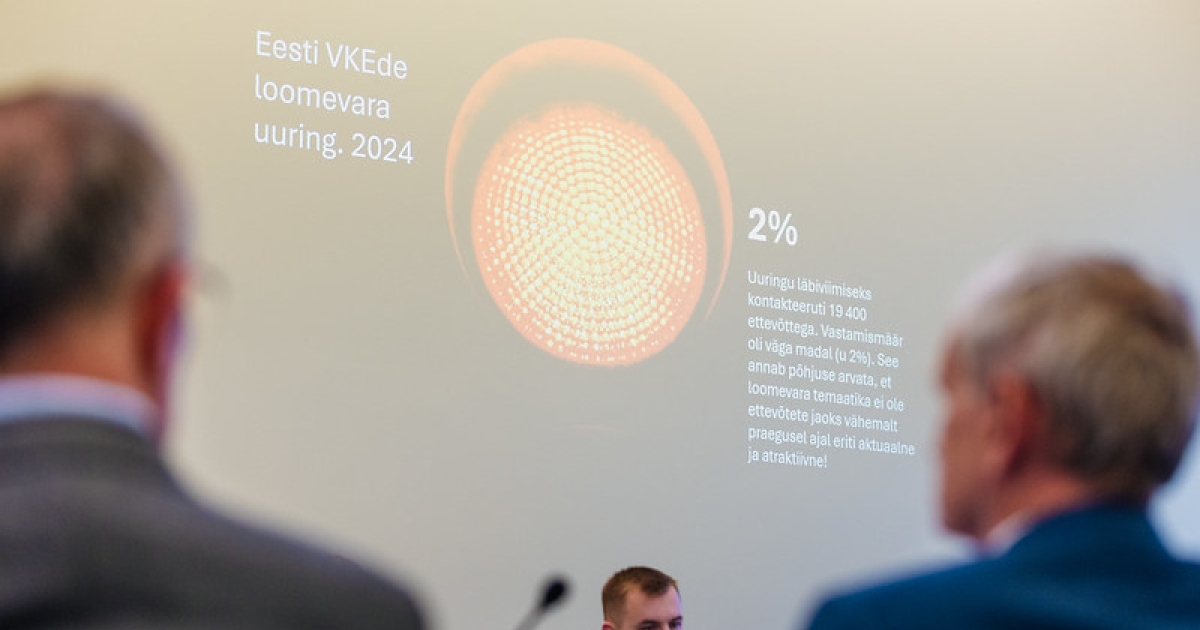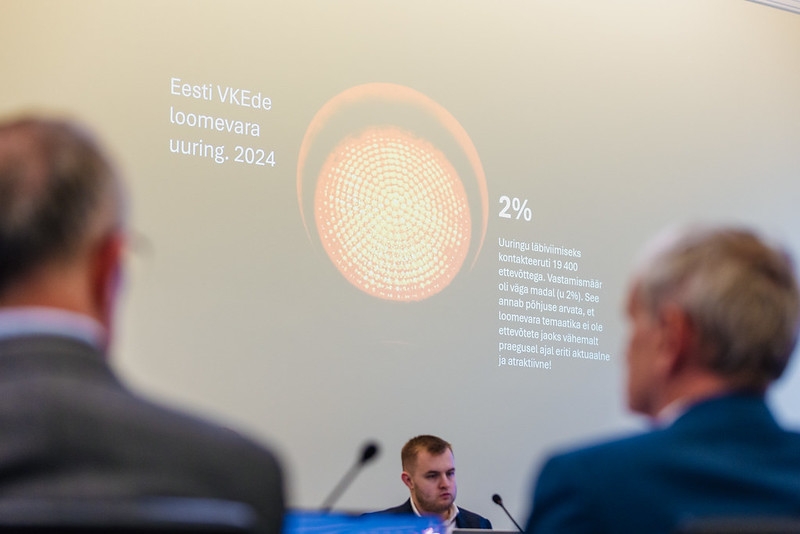
The discussions highlighted that, in research and development grants, applicability must become a more substantive criterion than it has previously been – one that funders of research institutions should clearly evaluate and project implementers should verify upon completion of the project. The discussion reached the conclusion that, in the case of thematic programmes funded by the Ministry of Education and Research, the criteria for receiving support should include the requirement that only projects whose results have a real market need and/or commercial potential are eligible for funding. This avoids a situation where research with little social benefit is supported under the guise of practical application.
The meeting also discussed the success of Estonian research groups in the European Commission’s “Teaming for Excellence” programme, in which seven Estonian projects have reached the second round. As each project requires a state letter of guarantee and co-financing of up to 15 million euros, Estonia will need to choose which projects to support. The rules of the European Union’s structural funds also set limits on co-financing opportunities, allowing support only for areas of smart specialisation, such as digital solutions or health technologies. It was decided that the Ministry of Education and Research and the Ministry of Economic Affairs and Communications would assess the compliance of applications with the specified areas and submit a proposal for letters of guarantee to the government for suitable applications. If there are more Estonian projects than the government has budgetary resources for, the government will base its funding decisions on the European Commission’s project evaluation ranking.
The third topic of discussion was the need to update the legal framework for intellectual property. Experts pointed out that the current copyright law is outdated and does not allow for sufficient flexibility. The Code of Civil Procedure also needs to be updated so that businesses can better protect their rights in intellectual property disputes. It was found that the modernisation regulations of the entire field need to be further analysed. Awareness of intellectual property must be raised comprehensively, from student companies to doctoral students and entrepreneurs.
The RDC advises the government on the formulation of research, development, and innovation policy.
Members of the RDC include Kristina Kallas, Minister of Education and Research, and Erkki Keldo, Minister of Economic Affairs and Industry, who are responsible for these areas. Other members: Toomas Asser (Rector of the University of Tartu), Dan Bogdanov (Cybernetica AS, Director Of The Information Security Research Institute); Andi Hektor (Founder and Head of mu-ray.tech); Petri-Jaan Lahtvee (Founder of ÄIO tech OÜ, Professor of Food Technology and Bioengineering at TalTech); Tiit Land (Rector of TalTech); Jane Luht (STACC OÜ, Development Manager), Maive Rute (European Commission, Deputy Director-General for Internal Market, Industry, Entrepreneurship and SMEs, Member of the TalTech Council); Mart Saarma (President of the Estonian Academy of Sciences, Research Director at the University of Helsinki); Rainer Sternfeld (NordicNinja VC, entrepreneur and investor); Mart Ustav (Icosagen AS, CEO).
Gallery from the meeting: https://www.flickr.com/photos/stenbockimaja/albums/72177720329209051/