
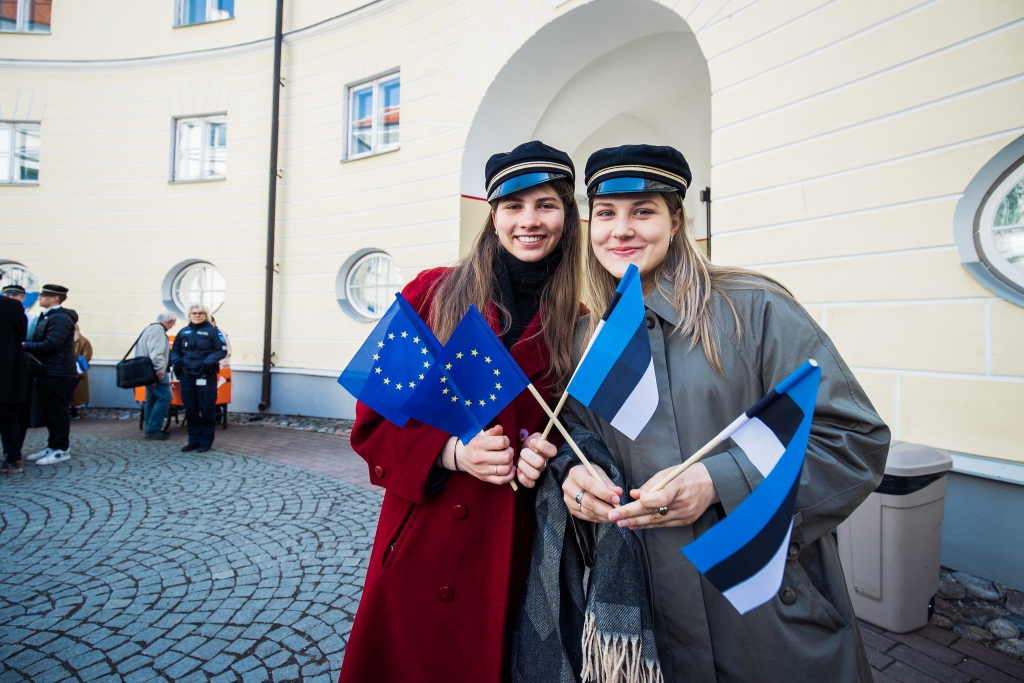
Above-average support for EU membership is shown by those aged 15-29 (93%), those aged 75+ who live in the countryside (91%), ethnic Estonians (89%), those with higher education (84%) and those with a net monthly income of more than 800 euros per family member.
Estonia’s activities within the EU are considered successful by 60% and unsuccessful by 28% of residents of the country.
The opportunity to live, travel, work and study in other Member States continues to be considered one of the most important reasons for EU membership: this was mentioned by 47% of respondents, wherein 29% considered it the most important reason of all.
Katrin Juhandi, the Deputy Director for EU Affairs at the Government Office, says the free movement of people has been considered an important reason for being in the EU for many years, especially among the young.
“Security has also become an issue,” she added, “with 34% of people seeing increased security as a key reason for EU membership. The importance people place on safety and security and the continued high level of support for membership overall indicate that the EU very convincingly demonstrated once again in 2023 both its unity and its ability to stand up to Russia’s aggression. During the year the union persisted in providing Ukraine with wide-ranging support and opened accession negotiations with the country, while imposing further sanctions on Russia.”
The survey also charted how aware people are (in their own view) of the interests and objectives of Estonia in the EU: 48% of residents consider themselves quite or well aware, however 42% feel they are unaware in this regard.
The fields in which support from the EU budget was most commonly considered necessary by the respondents were education and research (39%), agriculture and rural development (38%), safety and security (33% in total) and roads and energy and communications links (27%).
Although residents of Estonia feel that EU membership is good and that it has improved people’s well-being, they rate opportunities to have their say less highly.
Katrin Juhandi says this is an area in which everyone needs to try harder. “We have to explain things to people, share information with them about what Estonia’s positions are, what drives decisions and how they’re reached,” she said.
The survey is available on the Government Office website at https://riigikantselei.ee/media/3323/download.

