
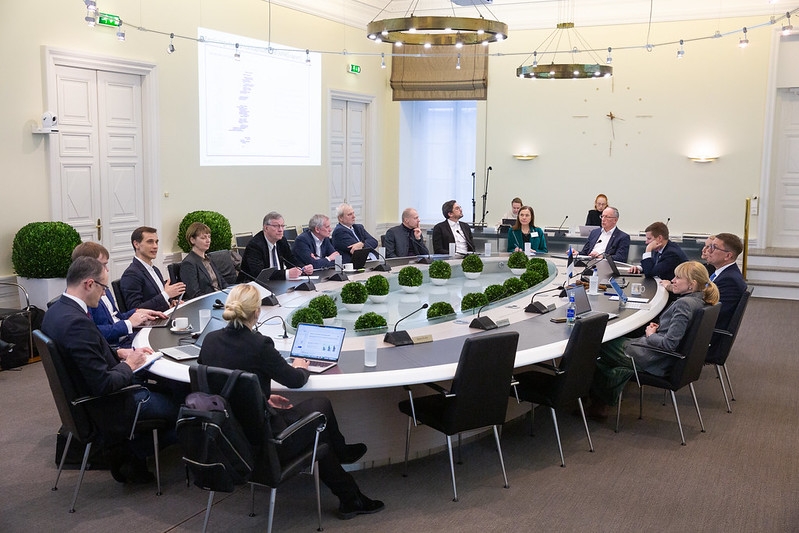
Rainer Sternfeld provided an overview of the current state and development needs of the venture capital ecosystem, highlighting three main structural challenges. According to him, the growth of Estonian startups is limited by funding gaps in the early stages, the low mobility of talent between science and startups, and the limited involvement of Estonian institutional investors, such as pension funds, in venture capital investments. These bottlenecks particularly hinder the movement of research-intensive solutions from the lab to the market.
The meeting also introduced the new strategy of the Estonian Entrepreneurship and Innovation Foundation (EIS) for 2026–2028, which is aimed at addressing these issues. The new strategy focuses on the commercialisation of research and development and funding for the pilot and scaling phases of startups to help science-based solutions to reach the stage of market-ready products and services.
“The goal of the new strategy of EIS is to concentrate a larger share of resources where their impact on the Estonian economy will be greatest – on knowledge-intensive and export-oriented companies that create high added value,” said Minister of Economic Affairs and Infrastructure Erkki Keldo. “By shifting the focus from being a grant distributor to becoming a development financier and by increasing the volume of loan and guarantee instruments, we can keep state funds in circulation and amplify their impact on the economy.”
During the strategic period, market-oriented funding through EIS will grow from 436 million euros to 806 million euros, with the largest increase coming from the expansion of financial instruments.
The TAIP discussion noted that the venture capital and startup ecosystem of Estonia has developed rapidly over the last decade and reached a phase where the focus is shifting from the creation of new startups to the growth of the ecosystem, capital circulation, and strengthening international competitiveness.
The Research and Development and Innovation Policy Council (TAIP) advises the government on issues related to research, development, and innovation policy, guiding strategic decisions that support societal well-being, enhance economic competitiveness, and promote the sustainability of the Estonian language and culture.
The TAIP meeting took place yesterday. Read more about the TAIP: https://valitsus.ee/taip
Gallery: Meeting of the Research and Development and Innovation Policy Council, 10 February 2026 | Flickr

