
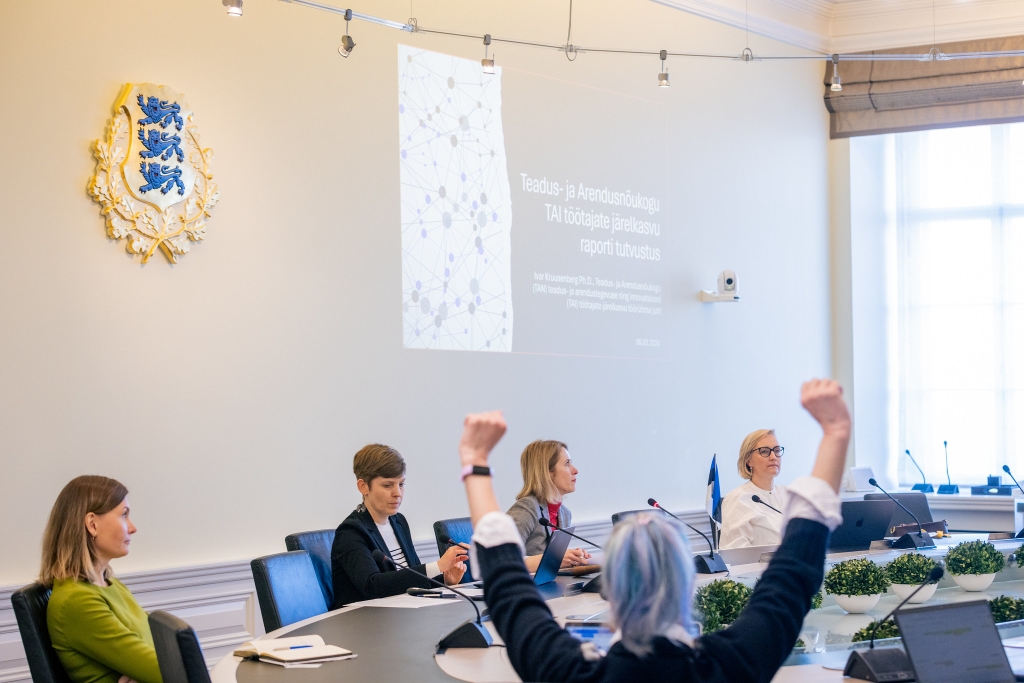
The progeny of Estonian researchers is below the EU average, and concerns about the recruitment of young researchers are an issue that the research community needs to tackle. In order to better map the problem, a working group of the Research and Development Council was set up. Under the leadership of Ivar Kruusenberg, the group carried out a study to find out the assessments of the young researchers themselves regarding the shortcomings of the Estonian research system. Members of the council discussed the summary of the survey, which concluded that one of the problems is the organisational and managerial culture of research institutions, which clashes with the values of young people. They are looking for an inclusive working environment that supports their development and treats all employees equally. The survey also found that the impact of research on society and its use in policy-making and business is more important to young researchers than the number of publications, which is currently one of the most important criteria for assessing the impact of research.
The young researchers also made a number of proposals to improve the situation. For example, they suggested diversifying the composition of decision-making bodies and the creation of an academic ombudsman in larger universities or across research institutions. Young researchers also want opportunities for professional mobility between research teams, research institutions, and universities, as well as the chance to participate in more than one grant application. They also noted that research in Estonia is successful and that there is a strong start-up community, but that its exposure to academia is currently rather limited. The young researchers therefore proposed an incentive system for universities to produce IP through start-ups.
The Research and Development Council decided that the Ministry of Education and Research and the Rectors’ Council, together with their partners, will analyse the bottlenecks identified by the young researchers and present their proposals by autumn.
Research grants are the most important instrument for funding research, paying the salaries of most researchers. In 2023, the system for evaluating applications was changed, which has raised questions about the suitability of the new evaluation method for the humanities. The Research and Development Council decided that the Estonian Research Council should analyse the reasons for the changes in the quality threshold in the humanities and continue work on improving the sectoral balance and quality of evaluation of research grants.
The Research and Development Council is a council advising the government, led by the prime minister and focusing mainly on the strategic issues of research and innovation policy.
Read more about The Research and Development Council: https://www.valitsus.ee/valitsuse-eesmargid-ja-tegevused/teadus-ja-arendusnoukogu-tan
Photos from the meeting: https://www.flickr.com/photos/stenbockimaja/albums/72177720315267511/

